


Choosing the Right Wearable Has Become More Important Than Ever
Wearable technology has transformed the way people approach health, fitness, and wellness. What began as simple step counters has evolved into advanced devices capable of monitoring activity levels, sleep quality, heart rate, recovery status, stress levels, and overall health.
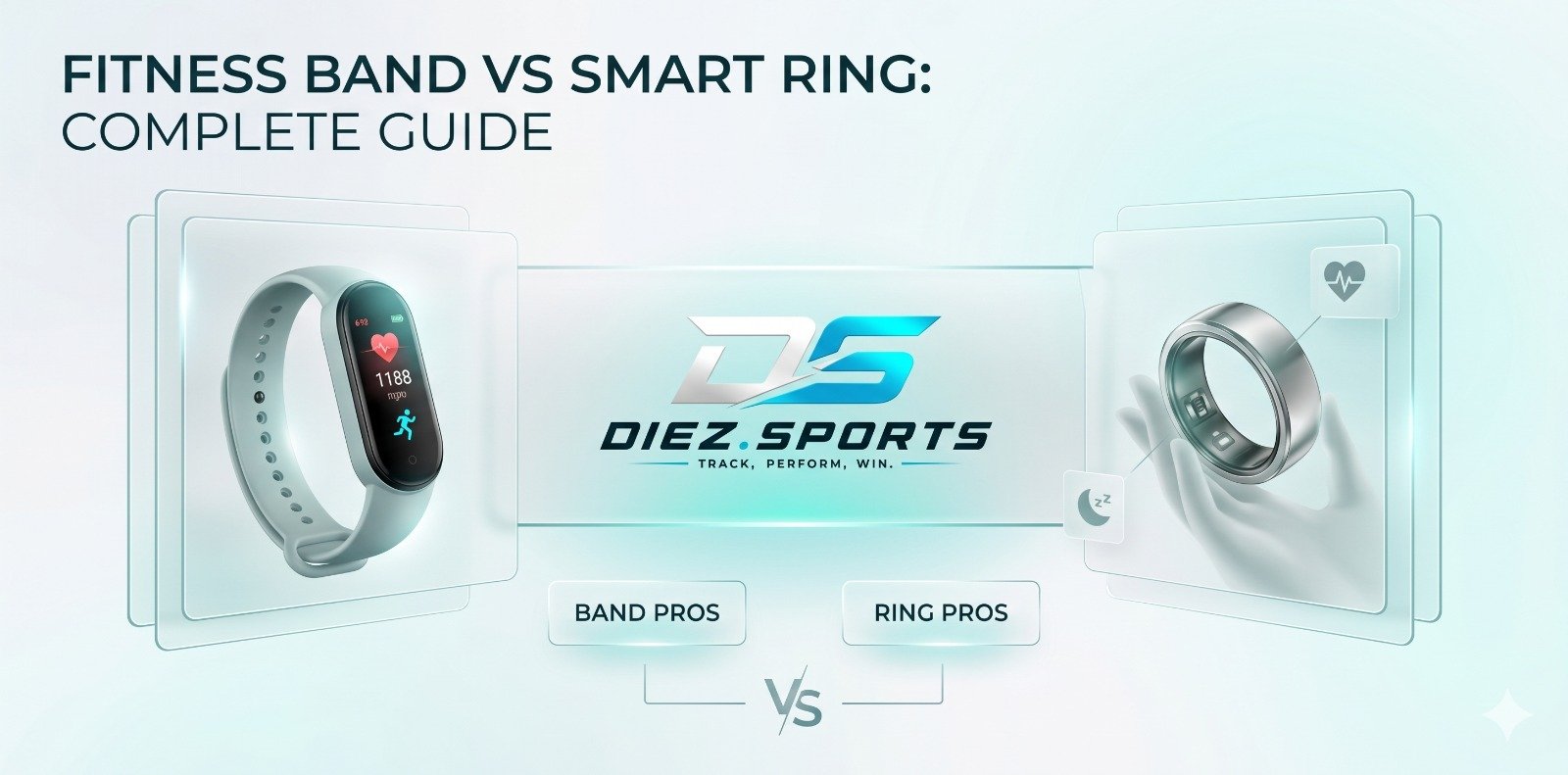
Today, consumers have more choices than ever before when selecting a wearable device. Among the fastest-growing categories are Fitness Bands and Smart Rings. Both are designed to help users track their health and fitness, but they do so in very different ways.
Many buyers find themselves asking an important question: Should I choose a Fitness Band or a Smart Ring?
The answer depends on your lifestyle, goals, and expectations from wearable technology.
Some users prioritize workout tracking and activity monitoring. Others focus on sleep quality, recovery insights, and long-term wellness. Understanding the strengths and limitations of each device can help you make the best decision for your health and fitness journey.
In this complete comparison guide, we will explore the differences between Fitness Bands and Smart Rings and help you determine which wearable is the better fit for your needs.
What Is a Fitness Band?
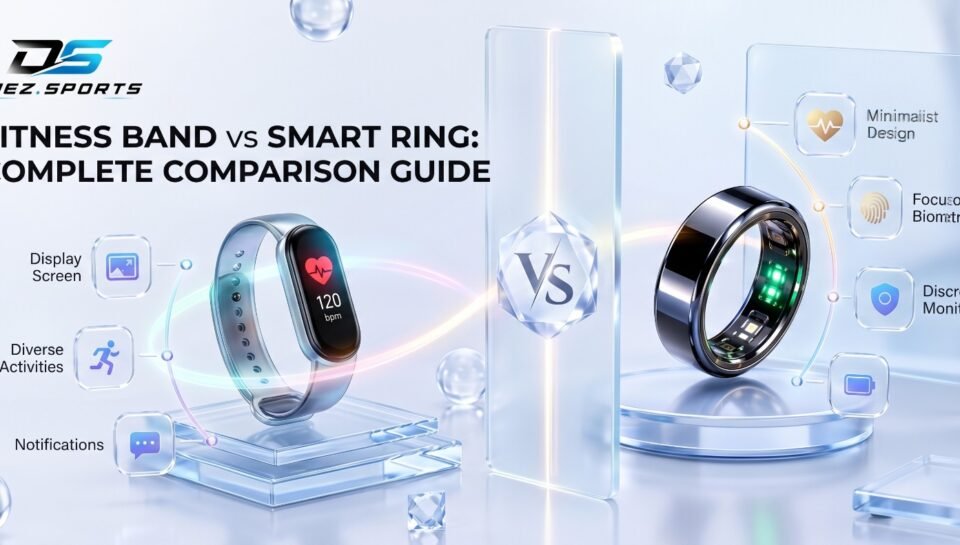
A fitness band is a wrist-worn wearable device designed primarily to track physical activity and fitness-related metrics.
Fitness bands gained popularity because they offered a simple and affordable way to monitor daily movement, workouts, calories burned, and health indicators.
Modern fitness bands have evolved into powerful Fitness Tracking Devices capable of tracking steps, exercise sessions, heart rate, sleep patterns, and overall activity levels.
Many users choose fitness bands because they are lightweight, easy to use, and specifically designed to support fitness goals.
As an Activity Monitoring Device and Daily Activity Tracker, a fitness band helps users stay aware of their movement patterns and encourages healthier habits.
What Is a Smart Ring?
A Smart Ring is a compact wearable device worn on the finger that focuses heavily on wellness monitoring, recovery tracking, sleep analysis, and overall health insights.
Unlike fitness bands, Smart Rings are designed to be worn continuously throughout the day and night.
A Smart Fitness Ring functions as a Health Tracking Device, Sleep Monitoring Device, Recovery Monitoring Device, and Personal Health Tracker simultaneously.
Because of their small size and lightweight design, Smart Rings often provide a more comfortable experience for users interested in continuous health monitoring.
Many consumers searching for the Best Smart Ring in India are attracted to the device’s ability to provide advanced wellness insights without the bulk of traditional wearables.
Design and Comfort Comparison
One of the biggest differences between a Fitness Band and a Smart Ring is the way they are worn.
A fitness band sits on the wrist and remains visible throughout the day.
Many users appreciate the familiar design and easy access to information displayed on the screen.
However, some individuals find wrist-based devices uncomfortable during sleep or extended wear.
A Smart Ring offers a more discreet and minimalist experience.
Because it is worn on the finger, many users quickly forget they are wearing it.
The compact design makes it ideal for continuous monitoring, particularly during sleep.
For users who prioritize comfort and unobtrusive wearability, Smart Rings often have an advantage.
Activity Tracking: Which Device Performs Better?
Activity tracking remains one of the core functions of wearable technology.
Fitness bands were specifically developed for movement monitoring and continue to excel in this area.
As a Daily Activity Tracker, a fitness band records steps, movement patterns, exercise sessions, and overall activity levels throughout the day.
A Smart Ring also functions as an Activity Monitoring Device, but its primary focus extends beyond activity alone.
While both devices track movement effectively, fitness bands generally place greater emphasis on activity-related metrics.
For users whose main goal is increasing movement and tracking exercise, a fitness band may be the better option.
Sleep Tracking Comparison
Sleep quality has become one of the most important health metrics monitored by wearable devices.
A Sleep Monitoring Device helps users understand how well they recover and how lifestyle habits affect overall wellness.
Fitness bands provide sleep-tracking capabilities, but some users remove them before bed because of comfort concerns.
A Smart Ring is specifically designed for continuous wear and often excels as a Sleep Tracking Device.
Because it is lightweight and unobtrusive, users typically wear it consistently throughout the night.
This uninterrupted wear allows Smart Rings to collect more complete sleep data and provide detailed recovery insights.
For individuals focused on sleep optimization, Smart Rings often provide a superior experience.
Recovery Monitoring: A Major Advantage for Smart Rings
Recovery has become one of the most important topics in modern health and fitness.
Training progress, athletic performance, and overall wellness depend heavily on recovery quality.
A Smart Ring functions as a Recovery Monitoring Device by continuously tracking health indicators associated with recovery readiness.
It helps users understand how effectively their bodies are adapting to physical and mental stress.
Fitness bands may provide some recovery-related information, but Smart Rings generally place much greater emphasis on recovery analysis.
This specialization makes them particularly appealing to athletes, fitness enthusiasts, and health-conscious individuals.
A Recovery Tracking Wearable can provide valuable insights that support smarter training and healthier lifestyle choices.
Heart Rate Monitoring Comparison
Heart rate tracking is one of the most valuable features available in wearable technology.
Both Fitness Bands and Smart Rings function as a Health Monitoring Device capable of continuously monitoring heart activity.
Fitness bands measure heart rate from the wrist.
Smart Rings collect data from the finger, an area rich in blood vessels.
Both methods provide useful information about wellness, recovery, and fitness adaptation.
As a Biometric Tracking Device, either wearable can help users better understand how exercise, sleep, and stress influence overall health.
For everyday wellness monitoring, both categories perform well.
Stress Monitoring and Wellness Insights
Modern wearable devices are increasingly focused on overall wellness rather than simple activity tracking.
Stress monitoring has become one of the most sought-after features within Health Technology.
A Smart Ring often excels in this area because it continuously monitors physiological indicators associated with stress and recovery.
By functioning as a Personal Health Tracker, it provides users with a broader understanding of overall wellness.
Fitness bands also offer wellness-related insights, but Smart Rings typically provide a more comprehensive focus on recovery, stress management, and long-term health monitoring.
Fitness Tracking for Athletes
Athletes require more than basic activity monitoring.
Training readiness, recovery status, sleep quality, and performance optimization all influence athletic success.
A Smart Ring serves as an effective Sports Performance Tracker by helping athletes monitor recovery and readiness.
Fitness bands remain valuable because they provide excellent activity tracking and workout monitoring capabilities.
The ideal choice depends on individual priorities.
Athletes focused heavily on recovery often prefer Smart Rings.
Those focused primarily on activity tracking may lean toward fitness bands.
Many serious athletes choose to use both devices together.
Battery Life Comparison
Battery life is an important factor when choosing a wearable device.
Fitness bands generally offer excellent battery performance because they are optimized for continuous activity tracking.
Smart Rings also provide impressive battery life despite their compact size.
Because they focus primarily on health monitoring rather than display-based interactions, many Smart Rings can operate for several days before requiring a recharge.
Both device categories perform well in this area, making battery life less of a deciding factor than other features.
Smart Ring vs Smartwatch vs Fitness Band
Many consumers compare multiple wearable categories before making a purchase.
The Smart Ring vs Smartwatch discussion often focuses on wellness tracking versus multifunctionality.
A smartwatch offers notifications, communication tools, smartphone integration, and workout tracking.
Consumers searching for the Best Fitness Smart Watch, Bluetooth Calling Smartwatch, Waterproof Smartwatch, Smart Watch for Men, Smart Watch for Women, or Best Smart Watches 2026 often prioritize these features.
A fitness band focuses on activity monitoring and fitness support.
A Smart Ring specializes in sleep tracking, recovery monitoring, and wellness analysis.
Each category serves different user needs.
Weight Loss and Fitness Goals
For individuals pursuing weight loss, both devices can be effective.
A Fitness Band supports movement awareness and encourages daily activity.
A Smart Ring contributes by helping users understand sleep quality, recovery status, and overall wellness.
Because sleep and recovery influence energy levels, exercise consistency, and weight management, Smart Rings can play a significant role in long-term fitness success.
The best device depends on which aspects of health and fitness you value most.
Affordable Wearable Technology Options
Many consumers are looking for effective wearable technology without spending a large amount of money.
Affordable Smart Watches, Budget Smart Watches, and Smart Watches Under Budget continue to attract attention because of their accessibility.
Similarly, fitness bands remain one of the most cost-effective entry points into wearable technology.
Smart Rings are becoming increasingly affordable as competition grows within the market.
A good Smartwatch Buying Guide or wearable comparison should always focus on value rather than price alone.
The most effective device is the one that supports your goals and encourages consistent use.
The Future of Fitness Technology
The future of wearable technology is becoming increasingly focused on health intelligence.
Advances in artificial intelligence, biometric monitoring, recovery analysis, and Health Technology are transforming wearable devices into sophisticated health companions.
Both Fitness Bands and Smart Rings will continue evolving to provide deeper insights into activity, recovery, sleep, stress management, and overall wellness.
These innovations will make wearable technology even more valuable for users seeking healthier lifestyles.
Final Verdict: Fitness Band or Smart Ring?
There is no universal winner in the Fitness Band vs Smart Ring comparison.
A Fitness Band is ideal for users focused primarily on activity tracking, exercise monitoring, and movement awareness.
A Smart Ring is ideal for users who prioritize sleep quality, recovery monitoring, wellness insights, and long-term health tracking.
Both devices function as a Fitness Tracking Device, Health Tracking Device, Activity Monitoring Device, and Smart Wearable for Health and Fitness.
The right choice depends on your personal goals, lifestyle, and how you plan to use wearable technology.
Conclusion
Fitness Bands and Smart Rings represent two of the most exciting categories within modern wearable technology.
While both devices support healthier lifestyles, they serve different purposes and provide different experiences.
Fitness Bands excel in activity tracking and workout monitoring, while Smart Rings specialize in sleep analysis, recovery monitoring, wellness tracking, and continuous health insights.
Whether you choose a Fitness Band or a Smart Ring, investing in wearable technology can help you gain a deeper understanding of your body, improve fitness consistency, and make more informed decisions about your health.
Contact Details
Website: Diez Sportz
Phone: +91-7023003060
Email: diezsports.web@gmail.com